

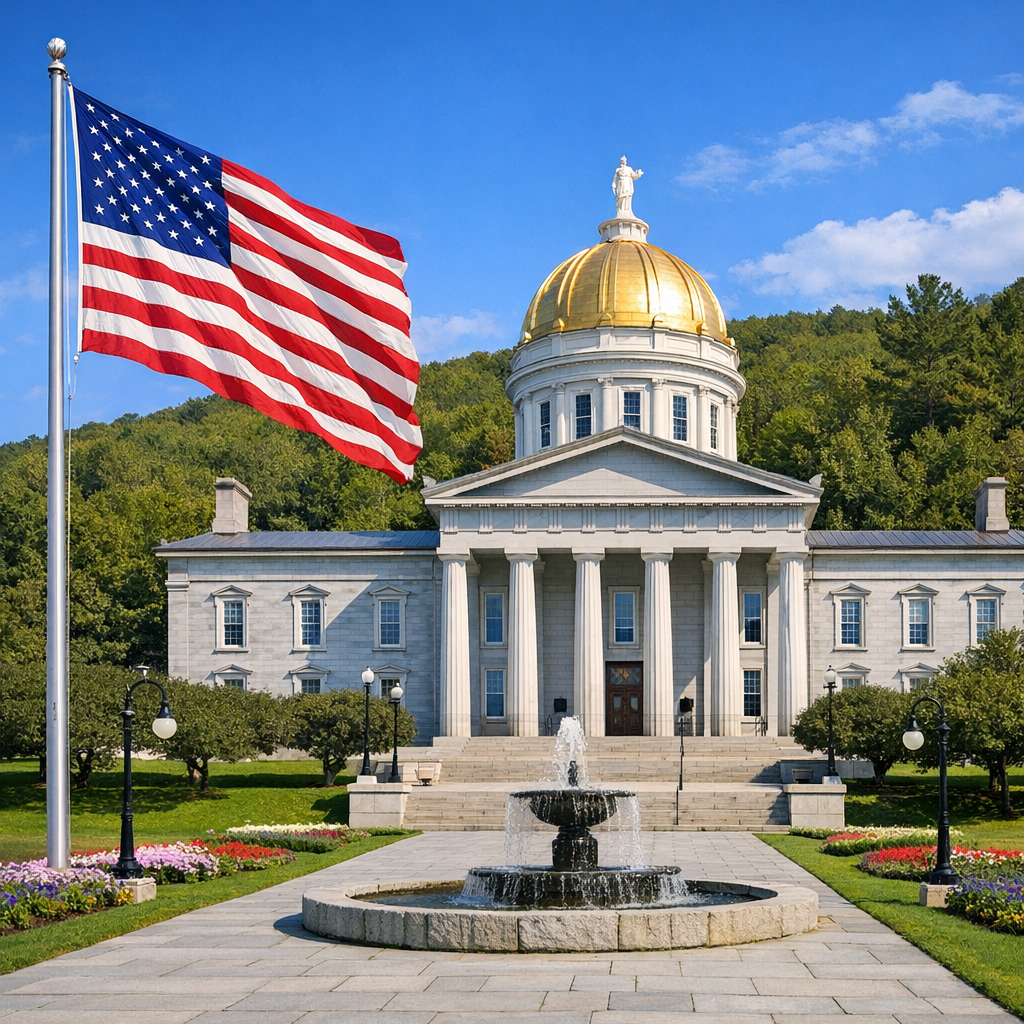
Vermont’s political journey offers a unique lens through which to view broader national trends. Historically a Republican stronghold, the state has transitioned into a bastion of progressive policies, while still embracing moderate leadership.
From Red to Blue: A Historical Perspective
For over a century, Vermont was synonymous with Republican dominance. From the mid-19th century until the 1960s, the state consistently supported Republican candidates in national elections. This trend began to shift in the latter half of the 20th century, influenced by demographic changes and evolving political ideologies. By 1992, Vermont had firmly aligned with the Democratic Party in presidential elections, a pattern that continues today. [1]
Progressive Policies and Moderate Leadership
Despite its Democratic leanings in federal elections, Vermont’s gubernatorial seat has often been held by Republicans. Governor Phil Scott, a Republican, exemplifies this trend. His governance focuses on fiscal responsibility and infrastructure, while he supports progressive stances on social issues such as gun control and abortion rights. This blend of fiscal conservatism and social progressivism resonates with Vermont’s electorate, reflecting a broader national conversation about the role of moderation in politics. [2]
Economic Contributions on the National Stage
Economically, Vermont may be one of the smallest contributors to the national GDP, with a real GDP of $36.4 billion in 2024. However, its per capita GDP of $56,300 underscores a productive workforce. The state’s economy is bolstered by sectors such as agriculture, tourism, technology, and trade. Notably, Vermont’s computer and electronic products industry accounted for $685 million in exports in 2024, highlighting its role in the national and global markets. [3] [4]
Voter Engagement and Civic Participation
Vermont’s high voter turnout rates reflect a deeply engaged citizenry. In the 2024 presidential election, 70.9% of eligible voters cast ballots, surpassing the national average of 64.1%. This robust participation underscores the state’s commitment to democratic processes and serves as a model for civic engagement nationwide. [2]
In essence, Vermont’s political and economic narratives encapsulate broader national themes: the interplay between historical affiliations and contemporary shifts, the balance between progressive policies and moderate leadership, and the significance of active civic participation. As the nation continues to navigate complex political terrains, Vermont’s experiences offer valuable insights into the evolving American landscape.