

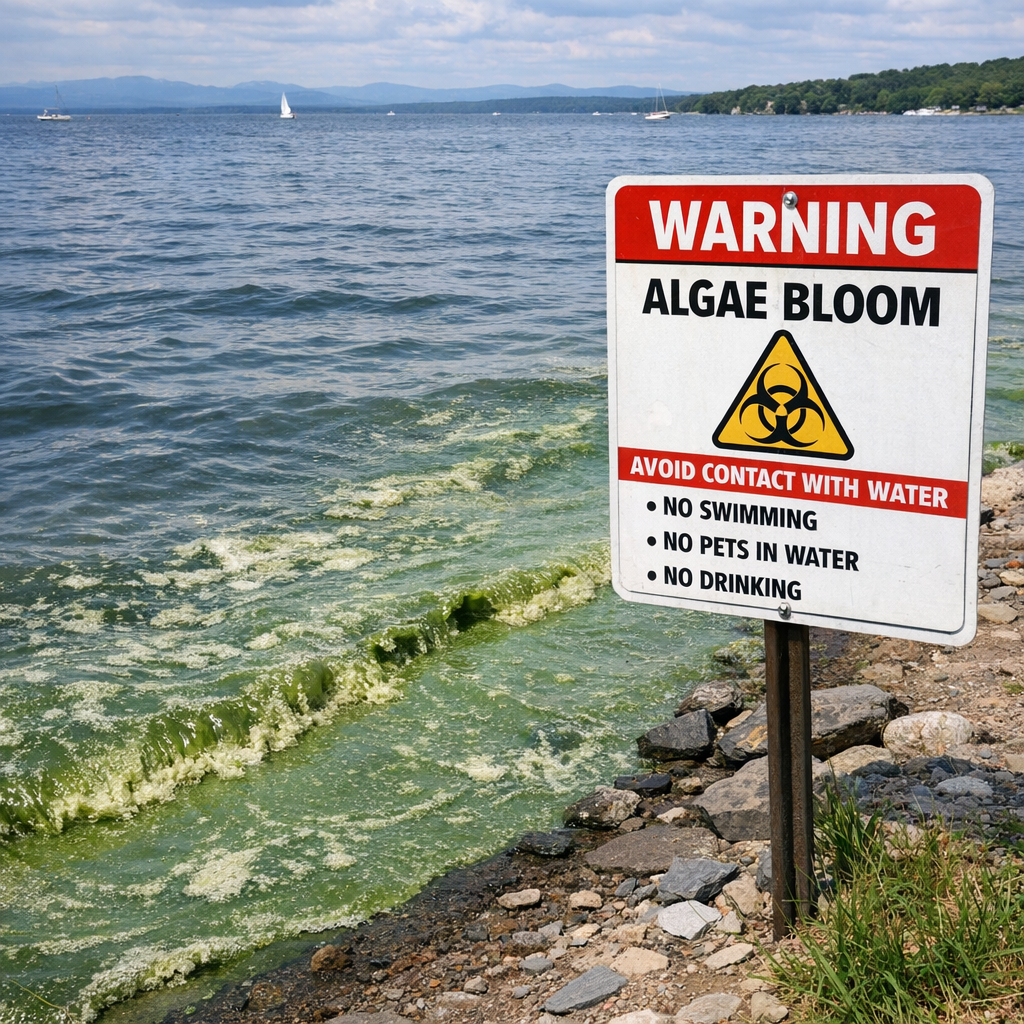
Lake Champlain, a vital resource for Burlington and surrounding communities, faces several water quality challenges that impact both the environment and public health. Understanding these issues is crucial for fostering a resilient and sustainable future.
Phosphorus Pollution and Algal Blooms
Excessive phosphorus levels in Lake Champlain have led to the proliferation of cyanobacteria, commonly known as blue-green algae. These blooms can produce toxins harmful to humans and wildlife, resulting in beach closures and health advisories. The primary sources of phosphorus include agricultural runoff, stormwater, and wastewater discharges. Efforts to reduce phosphorus inputs are ongoing, with the U.S. Environmental Protection Agency (EPA) establishing Total Maximum Daily Loads (TMDLs) to cap allowable phosphorus levels and guide remediation efforts.
Pathogen Contamination
Pathogens such as E. coli enter the lake through runoff from agricultural fields, faulty septic systems, and pet waste. Heavy rainfall can overwhelm wastewater treatment facilities, leading to combined sewer overflows that release untreated sewage into the lake. These events pose risks to swimmers and can lead to beach closures.
Invasive Species
Lake Champlain’s ecosystem is threatened by invasive species like the European water chestnut and the round goby. These species disrupt native habitats and food webs, leading to ecological imbalances. Monitoring and management programs aim to control their spread and mitigate impacts.
Climate Change Impacts
Climate change exacerbates existing water quality issues by increasing water temperatures and altering precipitation patterns. Warmer waters can intensify algal blooms, while more frequent and intense storms lead to greater runoff and erosion, introducing more pollutants into the lake. Projections suggest that by 2050, Lake Champlain may freeze over only once per decade, affecting both the ecosystem and winter recreation.
Community Initiatives and Resilience
Recognizing these challenges, Burlington has developed the Climate Resilient Burlington plan, outlining 32 actions to adapt to changing climate conditions and protect water quality. Initiatives include improving stormwater infrastructure, promoting green spaces, and enhancing public awareness and engagement.
Addressing Lake Champlain’s water quality challenges requires a collaborative approach involving government agencies, local communities, and individuals. By staying informed and participating in local initiatives, residents can contribute to the health and sustainability of this vital resource.