

Climate change is a global phenomenon with local repercussions, and Vermont is no exception. The state has experienced significant environmental shifts, including increased rainfall, more frequent storms, and warmer winters. These changes have profound effects on Vermont’s ecosystems, economy, and public health.
Environmental Changes in Vermont
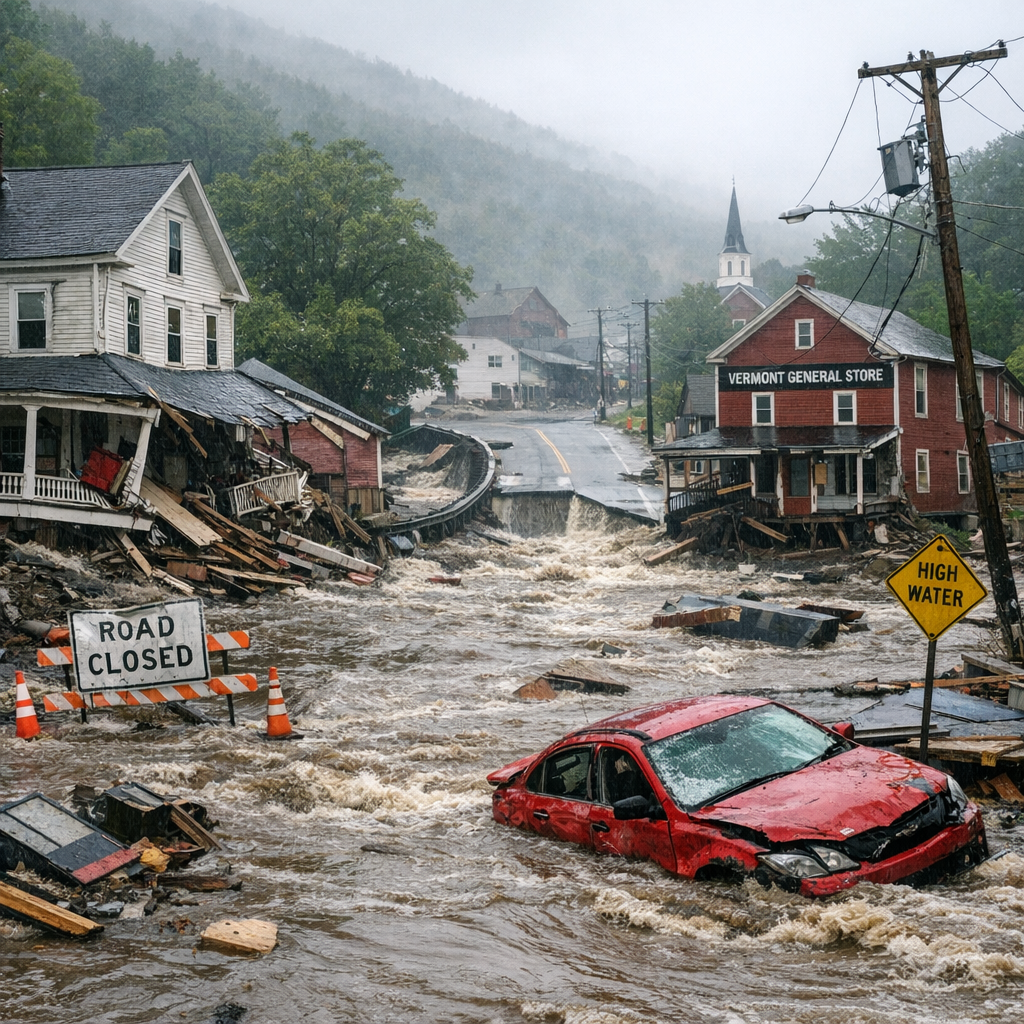
Over the past century, Vermont has warmed by more than two degrees Fahrenheit. This warming trend has led to earlier springs, increased precipitation, and more frequent heavy rainstorms. Such changes have resulted in severe flooding events, causing damage to property and infrastructure. For instance, in July 2023, Vermont experienced historic flooding that damaged over 4,000 homes and 800 businesses, resulting in two fatalities. Similar flooding occurred in July 2024, causing additional fatalities and extensive damage to homes, businesses, farms, and roads.
Economic and Agricultural Impacts
The state’s iconic dairy farms and maple sugaring industries are particularly vulnerable to climate change. Warmer winters and heatwaves affect milk production, livestock health, and maple sap flows. Additionally, Vermont’s buildings and transportation systems, originally designed for colder climates, face increased strain due to higher temperatures and more frequent extreme weather events.
Vermont’s Legislative Response
In response to these challenges, Vermont has taken legislative action. The state has developed a Climate Action Plan focusing on increasing capacity for climate resilience planning and implementation, and addressing inequities in under-resourced communities. This plan emphasizes strategic investments to prepare for unavoidable climate impacts, aiming to reduce future costs associated with recovery and adaptation.
Community Engagement and Education
Organizations like the Vermont Council on World Affairs (VCWA) play a crucial role in educating and engaging the public on climate issues. Events such as the ‘Engage America Climate Event’ focus on building a more just and equitable response to climate change through discussions on renewable energy, urban sustainability, sustainable agriculture, and rural climate resilience.
Conclusion
While climate change presents significant challenges, Vermont’s proactive measures and community engagement efforts demonstrate a commitment to building a resilient and sustainable future. By addressing these issues head-on, Vermont serves as a model for other states facing similar challenges.