

As global climate policies evolve, their effects resonate beyond national borders, influencing local environmental strategies and resilience efforts. Vermont, known for its commitment to sustainability, is actively adapting to these international developments.
Vermont’s Climate Superfund Act
In response to escalating climate-related damages, Vermont has enacted the Climate Superfund Act. This legislation aims to hold major polluters financially accountable for climate-related damages within the state. The law is modeled after hazardous waste superfunds from the 1980s and seeks to fund infrastructure fortification and property buyouts in anticipation of more damaging storms. The state is currently in the process of determining the costs associated with three decades of greenhouse gas emissions, with plans to bill responsible companies accordingly. Source
Federal Challenges to State Initiatives
The federal government has challenged Vermont’s Climate Superfund Act, arguing that the policy is “unlawful on its face” and urging the court to end what it describes as “Vermont’s lawless experiment.” This legal battle underscores the tension between state-level environmental initiatives and federal policies. Source
Community Engagement and Resilience
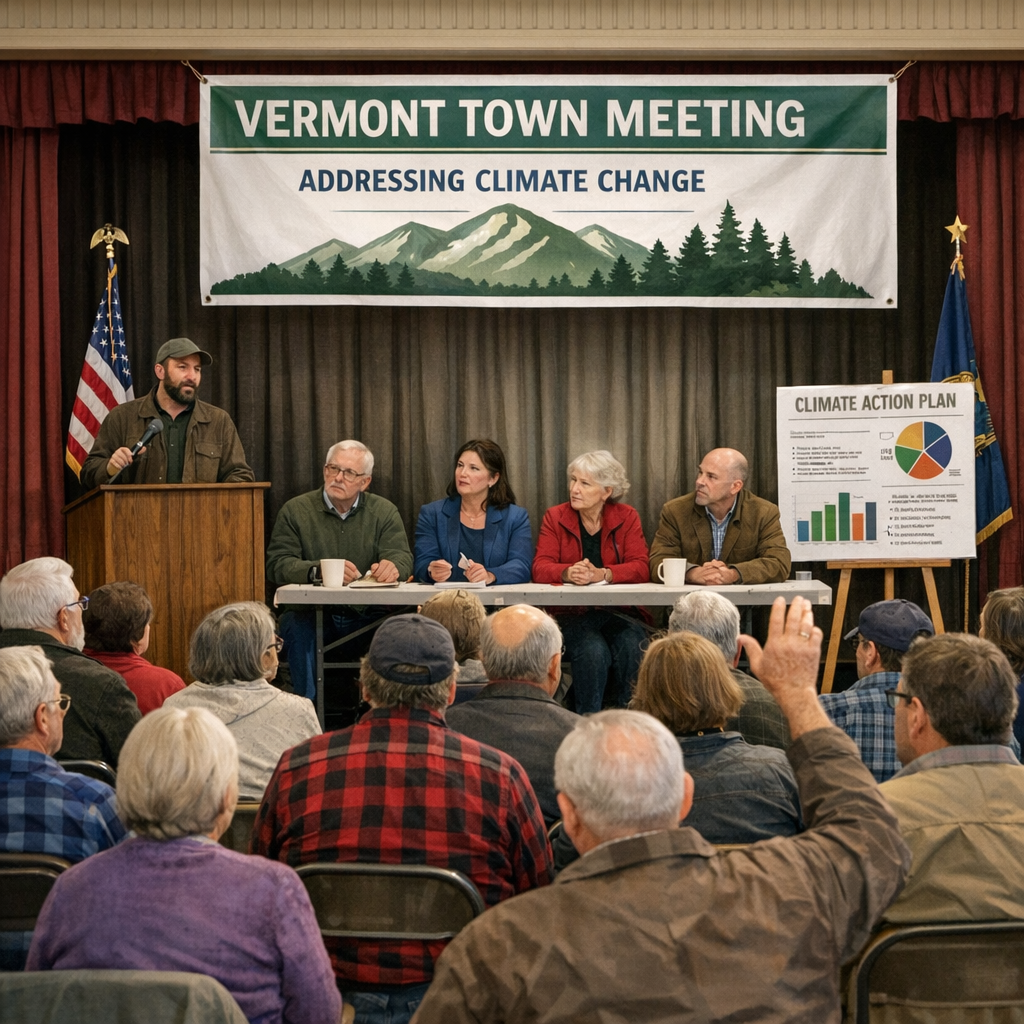
Vermont’s communities are actively engaging in discussions about building a more just and equitable response to climate change. Events like the “Engage America Climate Event” focus on renewable energy, urban sustainability, sustainable agriculture, and rural climate resilience. These initiatives highlight Vermont’s proactive approach to addressing climate change at both local and global scales. Source
By aligning local policies with global climate objectives, Vermont continues to demonstrate leadership in environmental stewardship and resilience planning.