

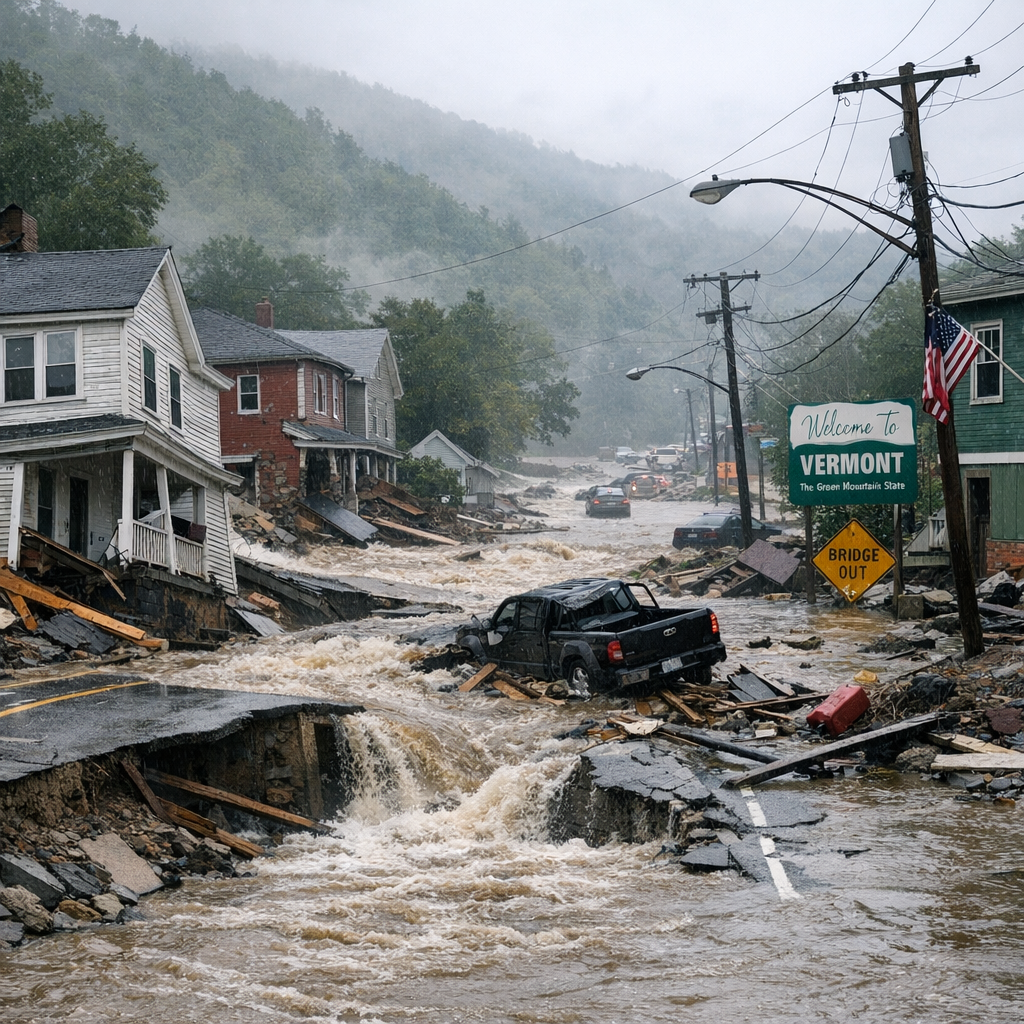
Climate change is a global phenomenon with local repercussions, and Vermont is no exception. The state has experienced significant environmental shifts, including increased rainfall, more frequent storms, and warmer winters. These changes have profound effects on Vermont’s ecosystems, economy, and public health.
Environmental and Economic Impacts
Over the past century, Vermont has warmed by more than two degrees Fahrenheit. This warming trend has led to earlier springs and increased precipitation. Heavy rainstorms have become more frequent, resulting in severe floods that damage property and infrastructure. For instance, in July 2023, Vermont experienced historic flooding that damaged over 4,000 homes and 800 businesses, leading to two fatalities. Similar flooding occurred in July 2024, causing additional fatalities and extensive damage to homes, businesses, farms, and roads. These events underscore the escalating challenges posed by climate change.
The state’s iconic dairy farms and maple sugaring industries are also under threat. Warmer winters and heatwaves affect milk production, livestock health, and maple sap flows, leading to reduced farm productivity. Additionally, Vermont’s infrastructure, originally designed for colder climates, faces increased strain due to higher temperatures. Roads, bridges, and railways are at risk of damage from thermal expansion, and urban areas experience exacerbated heat exposure.
Vermont’s Proactive Measures
In response to these challenges, Vermont has been proactive in addressing climate change. The state was among the first in the U.S. to adopt greenhouse gas emissions goals in 2006. More recently, Vermont enacted the Climate Superfund Act, aiming to hold major polluters financially responsible for climate damages. This legislation seeks to fund infrastructure improvements and climate resilience projects by billing oil and gas companies for their contributions to greenhouse gas emissions.
Furthermore, organizations like the Vermont Council on World Affairs (VCWA) are fostering discussions on building inclusive climate movements. Events such as “Diplomacy Begins Here: Building an Inclusive Climate Movement” emphasize the importance of a global approach to climate change, highlighting Vermont’s role in promoting sustainability and resilience.
Community Engagement and Future Outlook
Vermont’s communities are actively engaging in climate action. Local businesses, environmental groups, and residents are collaborating to implement sustainable practices and advocate for policies that mitigate climate change impacts. Educational initiatives and public forums are raising awareness and encouraging collective action.
As climate change continues to pose challenges, Vermont’s commitment to proactive measures and community engagement serves as a model for other regions. By addressing both the causes and effects of climate change, Vermont aims to protect its environment, economy, and the well-being of its residents.