

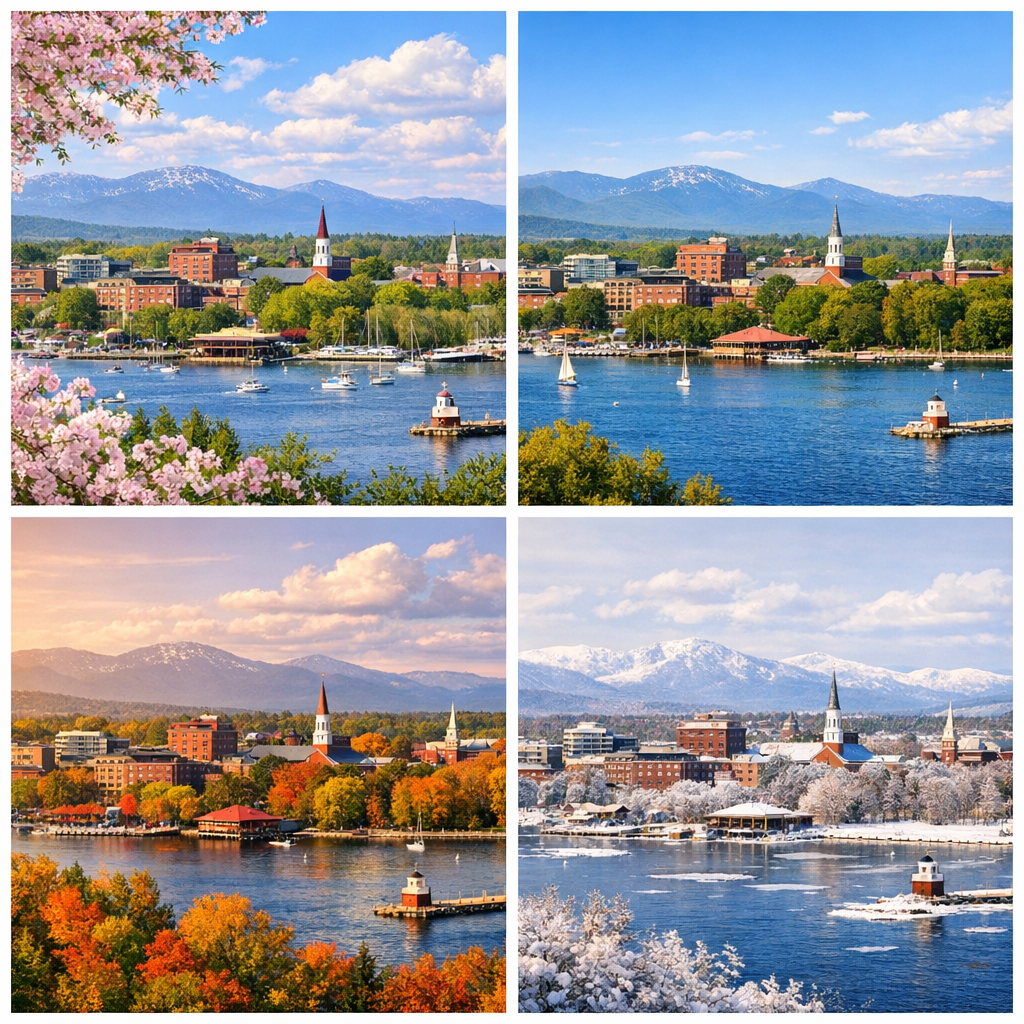
Burlington, Vermont, experiences a classic northern New England climate characterized by four distinct seasons, each offering unique weather patterns and environmental conditions.
Winter
From December through February, Burlington faces cold temperatures, with average highs ranging from 28°F to 35°F and lows between 12°F and 21°F. Snowfall is significant, averaging about 80 inches annually, making it essential for residents to prepare for snowy conditions.
Spring
March and April bring milder temperatures, with highs in the 30s to 50s°F. This period is often wet, as melting snow and spring rains contribute to increased precipitation. By May, temperatures become more pleasant, reaching highs in the 60s°F.
Summer
June through August offers warm and comfortable weather, with average highs in the low to mid-80s°F. Humidity levels are moderate, and occasional thunderstorms can occur. Lake Champlain reaches its warmest temperatures in late July and August, providing ideal conditions for water activities.
Fall
September sees highs in the low 70s°F, gradually dropping to the 50s by October. Clear, crisp days are common, and the region is renowned for its vibrant fall foliage. The first frost typically arrives in mid-October, signaling the transition to colder months.
Understanding these seasonal patterns helps residents and visitors alike to plan activities and prepare for the varying weather conditions that define life in Burlington.