

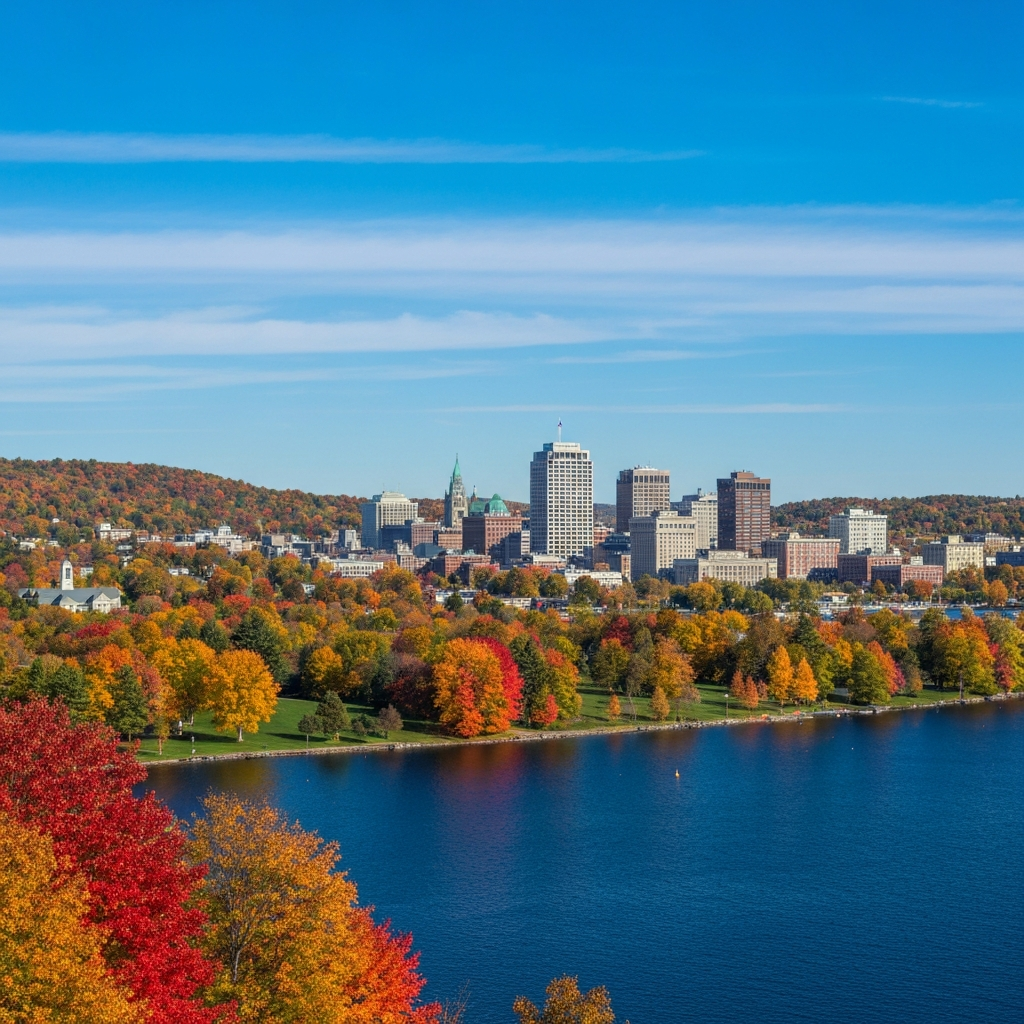
Burlington, Vermont, offers residents and visitors the opportunity to experience the full spectrum of New England’s four seasons, each bringing its own unique charm and challenges.
Winter: A Snowy Wonderland
Winters in Burlington are characterized by cold temperatures and substantial snowfall. Average low temperatures in January hover around 12°F (-11°C), with highs reaching approximately 24.6°F (-4.1°C). Snowfall is abundant, averaging nearly 70 inches annually, transforming the city into a picturesque winter landscape ideal for skiing and snowboarding enthusiasts.
Spring: A Gradual Thaw
As winter recedes, spring brings a gradual warming trend. March sees average highs of 39.5°F (4.2°C), which rise to 54.1°F (12.3°C) by April. This season is marked by increased rainfall, averaging around 3.1 inches in April, contributing to the lush greenery that emerges as the snow melts.
Summer: Warm and Inviting
Summers in Burlington are warm and pleasant, with average high temperatures in July reaching 78.1°F (25.6°C). The city experiences moderate humidity, making it comfortable for outdoor activities such as hiking, biking, and enjoying Lake Champlain. Rainfall during summer is relatively consistent, with July averaging 4.34 inches, often accompanied by occasional thunderstorms.
Fall: A Tapestry of Colors
Autumn is perhaps Burlington’s most celebrated season, renowned for its vibrant foliage. September and October offer mild temperatures, with highs ranging from 58.2°F (14.6°C) to 71.8°F (22.1°C). This period is ideal for outdoor activities like apple picking and hiking, as the landscape transforms into a colorful tapestry.
Climate Change: A Local Perspective
Recent years have seen noticeable shifts in Burlington’s climate patterns. Average air temperatures have increased by 2°F in the summer and 4°F in the winter. Spring now arrives two weeks earlier, and winter starts one week later. Additionally, total annual precipitation has increased, particularly in the form of more intense rainfall events.
In response to these changes, the City of Burlington has developed the ‘Climate Resilient Burlington’ plan, outlining 32 actions to manage the risks associated with warmer, wetter, and more unpredictable weather. This plan focuses on building resilience and preparing for a changing climate over the next decade.
Understanding Burlington’s climate is essential for residents and visitors alike. By recognizing the characteristics of each season and acknowledging the impacts of climate change, we can better prepare for and adapt to the evolving environment of our beloved city.