

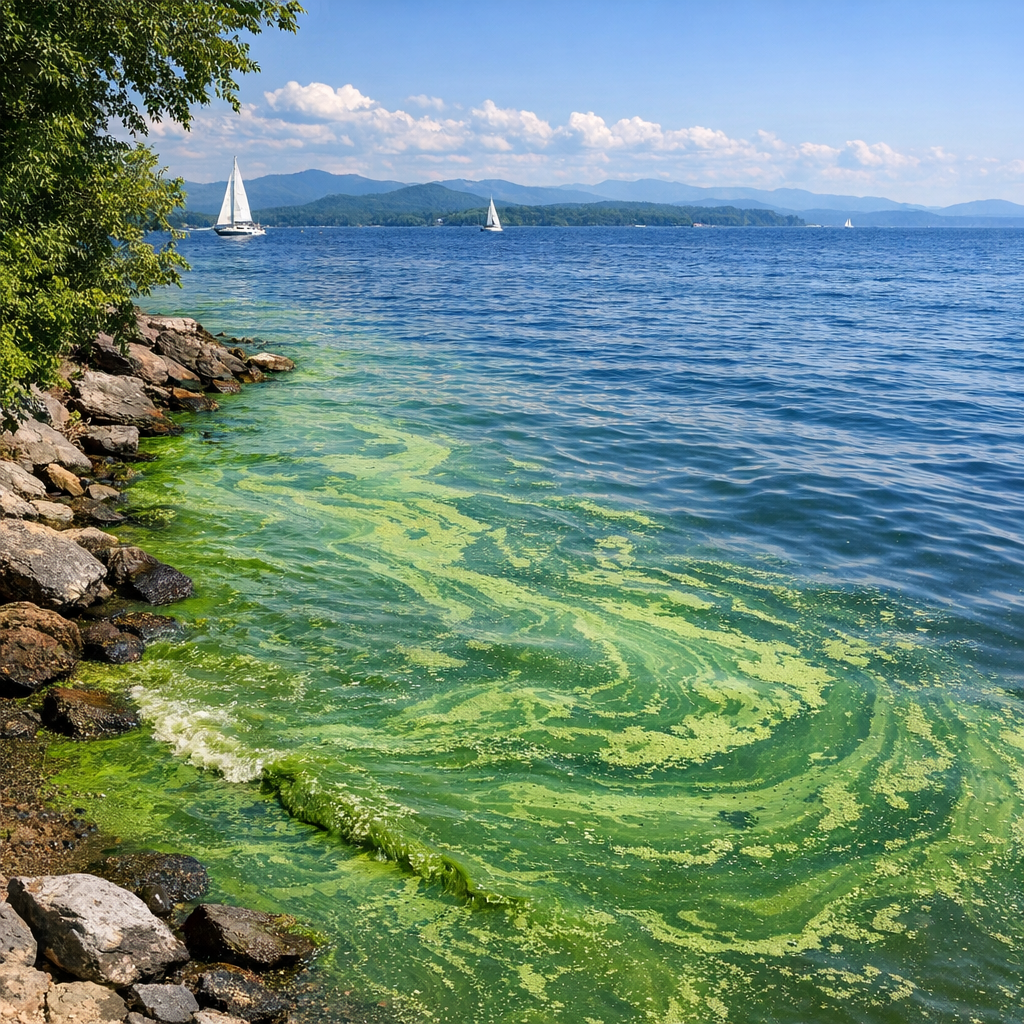
Lake Champlain, a vital resource for Burlington and surrounding communities, faces several water quality challenges that impact both the environment and public health. Understanding these issues is crucial for fostering a sustainable future for the lake.
Phosphorus Pollution and Algal Blooms
Excessive phosphorus levels in Lake Champlain have led to the proliferation of cyanobacteria, commonly known as blue-green algae. These blooms can produce toxins harmful to humans and wildlife, resulting in beach closures and health advisories. The primary sources of phosphorus include agricultural runoff, stormwater, and wastewater discharges. Efforts to reduce phosphorus inputs are ongoing, but achieving significant reductions remains a complex task. Learn more about phosphorus reduction efforts.
Pathogen Contamination
Pathogens such as E. coli enter the lake through runoff from agricultural fields, faulty septic systems, and pet waste. Heavy rainfall can overwhelm sewer systems, leading to combined sewer overflows that discharge untreated sewage into the lake. These events pose risks to swimmers and can lead to beach closures. Read more about pathogen contamination.
Toxic Substances
Mercury and polychlorinated biphenyls (PCBs) have been detected in Lake Champlain, leading to fish consumption advisories. These contaminants can accumulate in the food chain, posing health risks to humans and wildlife. While levels are generally low, ongoing monitoring and mitigation efforts are essential. Find out more about toxic substances in the lake.
Climate Change Impacts
Climate change exacerbates existing water quality issues by increasing water temperatures and altering precipitation patterns. Warmer waters can intensify algal blooms, while heavier rainfall contributes to increased runoff and erosion, introducing more pollutants into the lake. Local initiatives, such as the Climate Resilient Burlington plan, aim to address these challenges through adaptive strategies. Explore the Climate Resilient Burlington plan.
Community Engagement and Solutions
Addressing Lake Champlain’s water quality challenges requires a collaborative approach. Residents can contribute by reducing fertilizer use, properly disposing of pet waste, and supporting local conservation efforts. Staying informed and participating in community initiatives are vital steps toward preserving the health of our cherished lake.